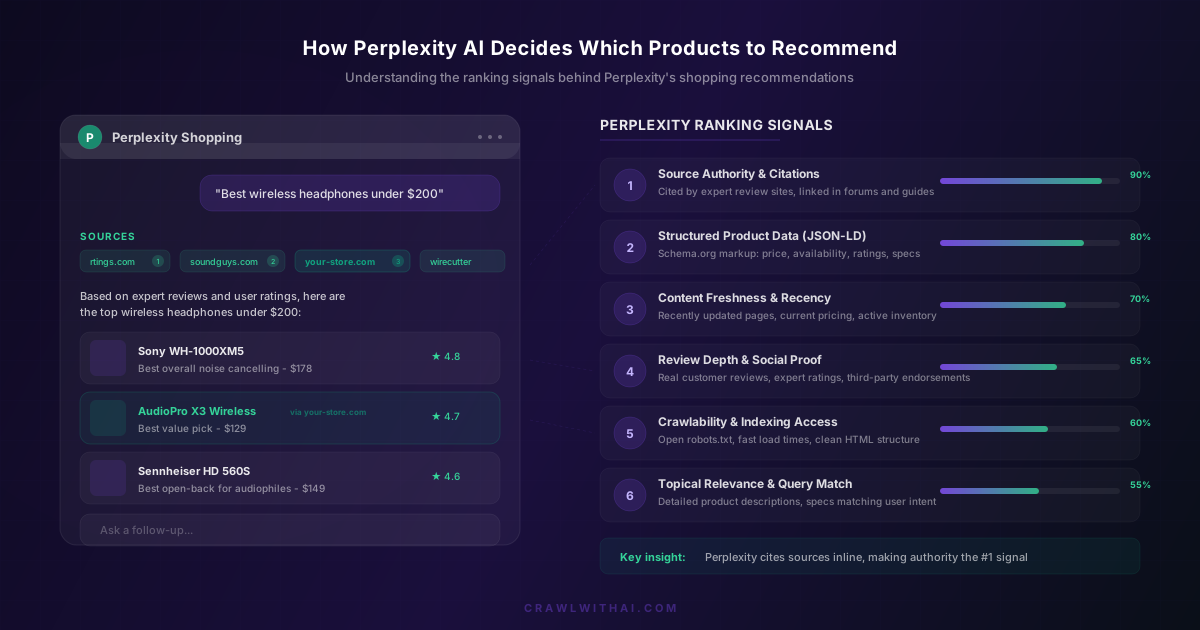
Perplexity AI handled over 250 million queries in December 2024, according to data shared by CEO Aravind Srinivas. A growing slice of those queries are shopping related. People are asking Perplexity things like "best wireless headphones under $200" or "most comfortable running shoes for flat feet," and they are buying what it recommends.
If your Shopify store is not showing up in those answers, you are losing sales to stores that are. But the way Perplexity selects products is fundamentally different from Google, ChatGPT, or even Gemini. Understanding how it works is the first step to getting your products recommended.
Perplexity Is a Search Engine First, an AI Second
Most AI shopping assistants pull from a static training dataset. Perplexity does not. It runs a live web search for every single query, pulls content from the top results, and then synthesizes an answer with inline citations.
This is a critical difference. When someone asks ChatGPT for a product recommendation, the answer draws heavily from training data collected months ago. When someone asks Perplexity the same question, it searches the web in real time and cites specific pages.
Perplexity's system uses what the company calls "answer engine" architecture. According to Perplexity's own documentation, every response includes numbered source citations so users can verify claims. This means your store does not need to be in anyone's training data. It needs to be on the live web, discoverable, and authoritative enough to get cited.
Source Authority Is the Number One Signal
Because Perplexity cites its sources directly in every answer, source authority carries enormous weight. The system preferentially pulls from pages that other credible sources also reference.
A 2025 study by Authoritas found that 78% of Perplexity's cited sources in product-related queries came from pages with at least 50 referring domains. This tracks with how traditional search authority works, but Perplexity applies it more aggressively because it needs to justify its citations to the user.
What this means for your store: if your product pages are only linked to from your own site, Perplexity has very little reason to cite them. You need external validation. That could be mentions in review roundups, forum threads, comparison articles, or niche publications. The more independent sources point to your product pages, the more likely Perplexity is to surface them.
Structured Data Tells Perplexity What Your Product Actually Is
Perplexity's crawler needs to understand your product quickly and accurately. JSON-LD structured data (Schema.org Product markup) is the fastest way to communicate price, availability, ratings, brand, and specifications without forcing the AI to parse messy HTML.
Google's own structured data documentation confirms that well-implemented Product schema can include over 30 distinct properties. Perplexity appears to use a similar extraction pipeline, pulling structured fields to populate its product cards and comparison tables.
Stores with complete structured data get more detailed mentions in Perplexity's answers. Instead of a vague reference, your product shows up with a price, rating, and direct link. Stores without structured data might get mentioned by name but without the rich context that drives clicks.
If you are on Shopify, your theme likely outputs basic JSON-LD already. But "basic" is not enough. You need to include aggregate ratings, availability status, shipping details, brand information, and product identifiers like GTIN or MPN. The more complete your structured data, the easier Perplexity can cite you accurately.
Content Freshness Matters More Than You Think
Perplexity's real-time search architecture means it strongly favours fresh content. A product page that was last updated 18 months ago is competing against pages updated last week. When Perplexity has to choose between two equally authoritative sources, the fresher one wins.
According to a 2025 analysis by Search Engine Journal, pages updated within the last 90 days were 3.2x more likely to be cited by Perplexity than older pages covering the same topic. This is partly because Perplexity's index refresh rate is faster than most traditional search engines.
For Shopify store owners, this means regular updates to product descriptions, pricing, and availability are not just good housekeeping. They are ranking signals. If your product goes out of stock and comes back, update the page. If you change your pricing, make sure the structured data reflects it immediately. Stale content is invisible content on Perplexity.
Reviews and Social Proof Feed the Algorithm
Perplexity does not just read your product page. It reads what other people say about your products across the web. Customer reviews on your site, third-party review scores on platforms like Trustpilot, and mentions in Reddit threads or community forums all contribute to the evidence base Perplexity uses when deciding whether to recommend you.
A 2025 BrightLocal survey found that 87% of consumers read online reviews for local businesses, and AI systems are learning to weight this same social proof. Perplexity specifically looks for consensus across sources. If multiple independent pages say positive things about your product, that signal compounds.
The key here is distribution. Reviews that only exist on your Shopify store carry less weight than reviews spread across your site, Google, Trustpilot, and niche forums. Encourage customers to leave reviews on multiple platforms. The cross-referencing pattern is exactly what Perplexity's citation engine is built to detect.
Crawlability: If Perplexity Cannot Read It, It Cannot Recommend It
Perplexity operates its own web crawler (PerplexityBot). If your robots.txt blocks it, your store is invisible. Many Shopify themes ship with overly restrictive robots.txt configurations, and some third-party apps add additional crawl blocks without telling you.
You can check your current configuration by visiting yourdomain.com/robots.txt. Look for any directives that block PerplexityBot or wildcard bot restrictions. Perplexity's documentation confirms that PerplexityBot respects robots.txt directives, so a single "Disallow" rule can remove your entire store from its index.
Beyond robots.txt, page load speed and clean HTML structure matter. Perplexity's crawler has a limited time budget per page. If your product page takes 6 seconds to load because of unoptimized images and heavy JavaScript, the crawler may time out before extracting useful content. Core Web Vitals are not just a Google ranking factor. They affect every AI crawler that visits your site.
How CrawlWithAI Gets Your Store Into Perplexity's Answers
CrawlWithAI is built specifically to solve the AI discoverability problem for Shopify stores. It audits your store's visibility across Perplexity, ChatGPT, Gemini, and other AI platforms, then gives you a clear action plan.
For Perplexity specifically, CrawlWithAI checks whether PerplexityBot can access your pages, validates your structured data completeness, monitors your citation rate across AI answers, and tracks the revenue that flows from AI-referred traffic back to your store.
Most Shopify analytics tools cannot distinguish between "direct" traffic and AI-referred traffic. CrawlWithAI uses confidence-scored attribution to show you exactly how much revenue Perplexity and other AI platforms are driving. Without this data, you are optimizing blind.
The Perplexity Shopping Experience Is Expanding Fast
Perplexity launched its "Buy with Pro" feature in late 2024, allowing Pro subscribers to purchase products directly within the app. In early 2025, the company expanded merchant partnerships and began testing visual product cards with richer metadata.
This matters because Perplexity is not just an answer engine anymore. It is becoming a shopping platform. The stores that show up in Perplexity's answers today are building the citation history and authority signals that will determine who gets featured in the shopping experience tomorrow.
If you already have strong visibility on traditional SEO but have not invested in AI discoverability, Perplexity is the easiest place to start. Its search-based architecture means the skills you already have in link building and content optimization translate directly. You just need to make sure the technical foundations, structured data, crawl access, and content freshness are in place.
FAQ
Does Perplexity use the same ranking factors as Google? Not exactly. Perplexity runs its own web search and has its own ranking model. Source authority and citation patterns are weighted more heavily because Perplexity shows inline citations to users. Google's PageRank signals overlap somewhat, but the emphasis on real-time freshness and structured data extraction is stronger in Perplexity.
Can I pay to get my products recommended on Perplexity? As of April 2026, Perplexity does not offer a paid placement program for product recommendations. All recommendations are generated from organic search results. This could change as the platform grows, but for now, the only way to get recommended is through genuine authority and content quality.
How do I know if PerplexityBot is crawling my store? Check your server logs for requests from the PerplexityBot user agent. You can also review your robots.txt at yourdomain.com/robots.txt to confirm you are not blocking it. CrawlWithAI includes a crawler access audit that checks this automatically for all major AI bots.
How is Perplexity different from ChatGPT for product recommendations? ChatGPT draws primarily from its training data, which can be months old. Perplexity searches the live web for every query and cites specific pages. This means your current product pages, pricing, and reviews matter much more on Perplexity. It also means new products can appear in Perplexity answers almost immediately if they have sufficient authority signals. For more detail on how ChatGPT works, see our post on how ChatGPT recommends products.
Does blocking PerplexityBot affect my Google rankings? No. Google and Perplexity operate completely separate crawlers and indexes. Blocking PerplexityBot only affects your visibility within Perplexity. However, blocking it means you are missing out on a growing traffic source that CrawlWithAI data shows drives measurable revenue for optimized stores.
Sources
- https://www.perplexity.ai/hub/faq
- https://www.authoritas.com/blog/ai-search-citations-study-2025
- https://www.searchenginejournal.com/content-freshness-ai-search/
- https://www.brightlocal.com/research/local-consumer-review-survey/
- https://developers.google.com/search/docs/appearance/structured-data/product