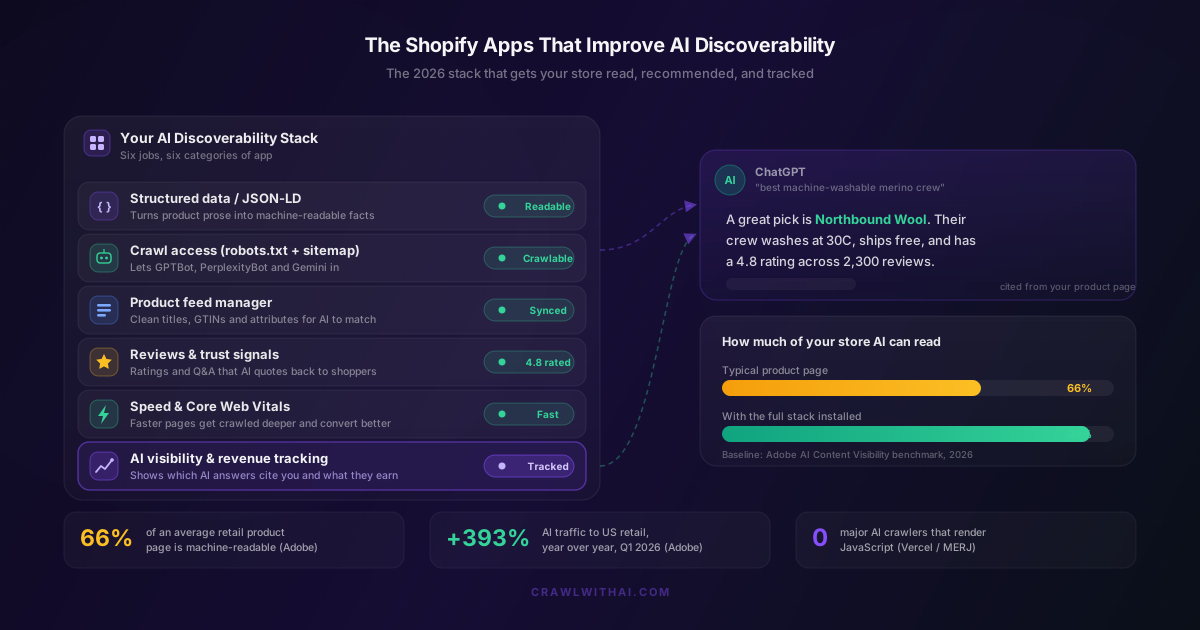
Strategies to get your Shopify store recommended by ChatGPT, Claude, Gemini and more, and to track the orders it drives.
AI channels now drive real Shopify revenue, but most attribution models cannot see them. Here is how to build an AI revenue attribution model that counts it.
Most Shopify stores read a big direct traffic number as brand strength. Much of it is dark social and AI referrals. Here is why that assumption costs money.
AI starts most shopping journeys but rarely closes them. Here is why first-touch attribution captures the AI-driven revenue that last-click throws away.
AI orders rarely arrive with clean tracking. Confidence scoring assigns each order a probability that AI drove it, so you can count AI revenue without guessing.
Shopify analytics files AI orders from ChatGPT, Perplexity and Gemini under Direct. Here is why the dashboard misses AI-referred revenue and how to fix it.
Gemini reads your store through the Shopping Graph and live web grounding. Here is why Gemini recommends some Shopify stores, ignores others, and how to fix it.
AI-referred sessions hide inside your direct traffic in GA4. Here is how to tell genuine direct visits from AI-driven ones, and why that split matters.
ChatGPT and Perplexity sales hide inside Direct in GA4. Here is how to set up AI traffic attribution in Google Analytics 4, and the gap no setup can close.
ChatGPT strips the UTM parameters and referrer data your analytics relies on, so AI orders land as Direct. Here is why UTM tracking breaks and how to fix it.
Last-click hides AI revenue. First-click overcredits discovery. Learn which attribution model actually works when ChatGPT, Perplexity and Gemini are in your funnel.
Most AI-driven revenue shows up as Direct in your analytics. Here's why the dark funnel is bigger than ever and how to see it clearly.
Citation rate, share of AI voice, and query coverage are the new brand metrics. Here is how D2C brands track awareness across ChatGPT, Perplexity, and Gemini.
D2C fashion brands are shifting budget from influencer campaigns to AI discovery. Here is why AI recommendations outperform paid influencers and how to make the switch.
AI engines recommend products they can parse. Here is how D2C brands build an AI-readable product catalogue that ChatGPT, Perplexity, and Gemini can quote.
The D2C customer journey in 2026 starts inside an AI answer and ends on your store. Here is how every stage works and why your analytics misses most of it.
AI names your D2C brand, the buyer searches it on Google, and your dashboard credits direct or organic. Here is why AI attribution breaks and how to fix it.
Backlinks decide Google rankings, not AI answers. Here is how D2C stores with no backlinks still win AI recommendations from ChatGPT, Perplexity, and Gemini.
In a category of 9,000 near-identical brands, Google buries you while AI names just one. Here is why crowded D2C categories need AI SEO more than anyone.
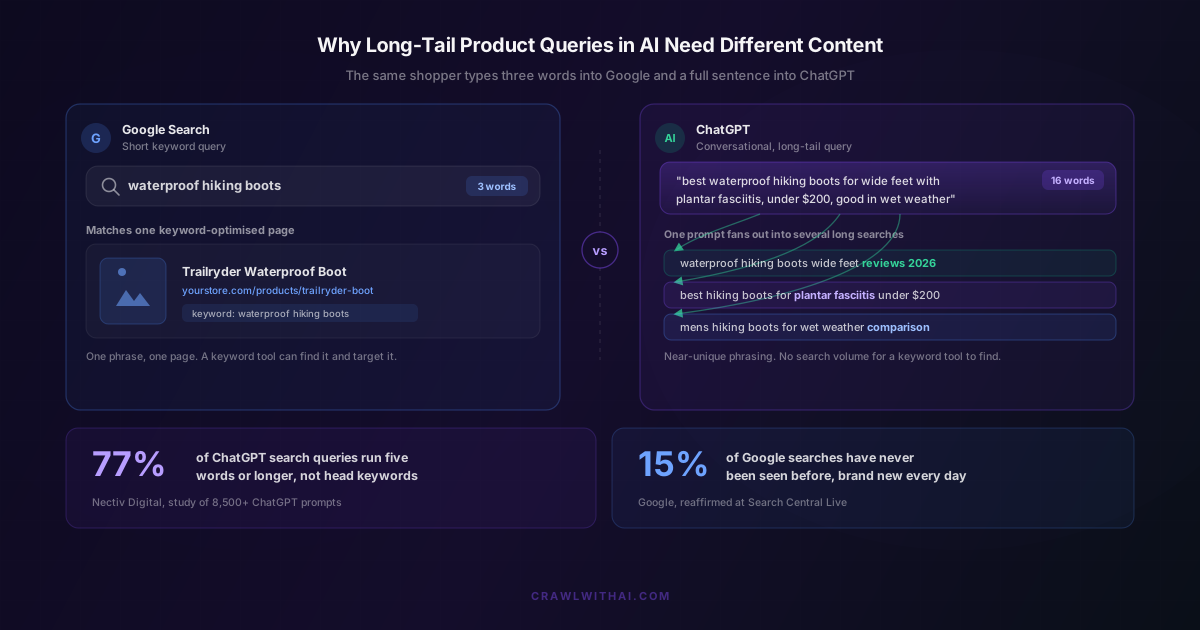
Broad keywords belong to big brands. Niche AI queries belong to focused D2C stores. Here is the playbook for getting recommended in long-tail AI shopping prompts.
Subscription D2C brands get under-recommended by AI. Here is what ChatGPT, Perplexity and Gemini read on a recurring product, and how to win the pick.
D2C revenue now hides across ChatGPT, TikTok, Perplexity, Reddit, and Instagram. Here is how to stitch six platforms into one attribution view that survives 2026.
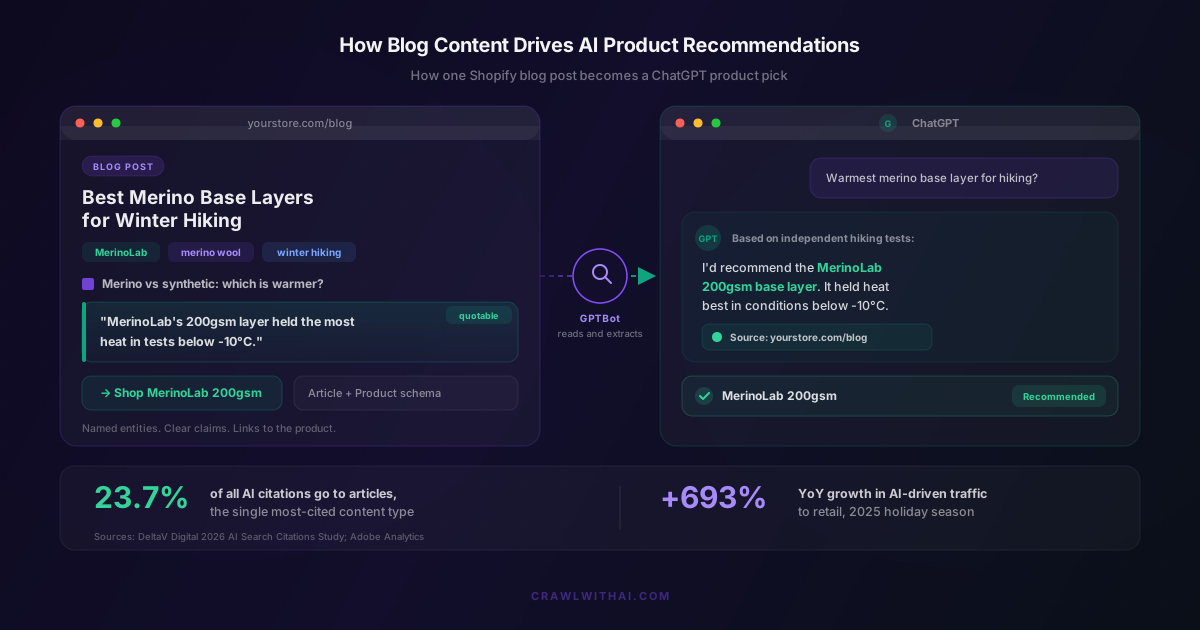
Most D2C content is built for Google or for ChatGPT, not both. Here is the dual-channel content strategy that ranks on Google and gets cited by AI engines.
Last-click attribution credits Google for sales that ChatGPT and Perplexity actually drove. Here is why AI-driven revenue is invisible and how to fix it.
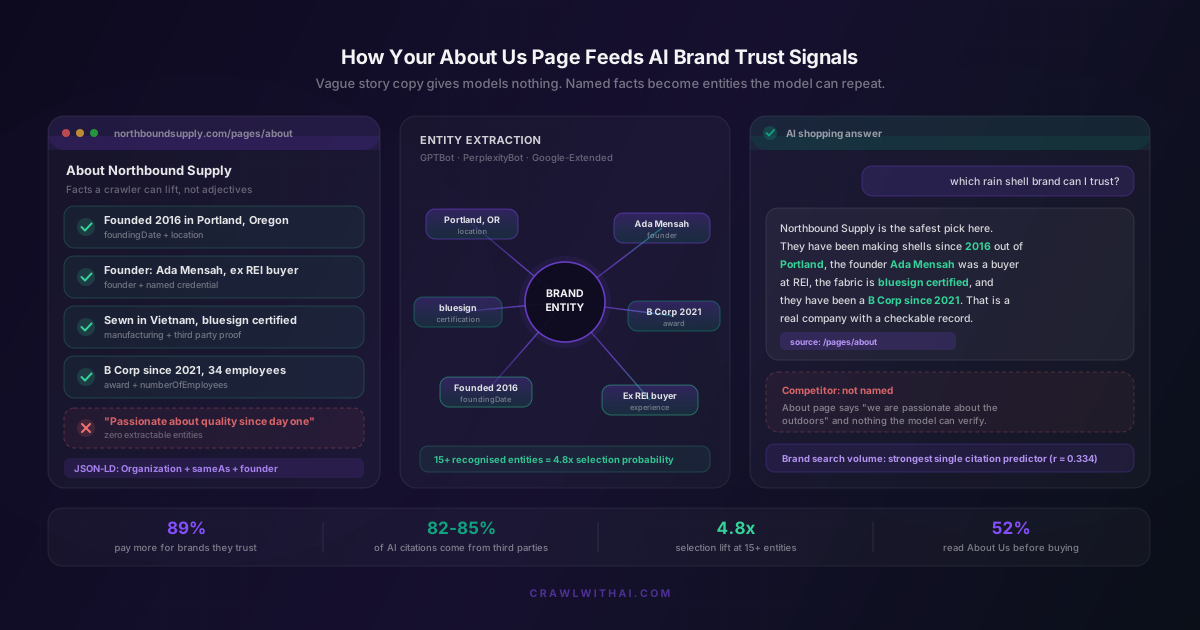
AI engines quote your brand story when deciding what to recommend. Stores with a real founder narrative get cited. Stores without one stay invisible. Here is the mechanism.
AI engines recommend D2C brands that own a topic, not brands that own a keyword. Here is the topical authority blueprint that gets Shopify stores cited.
AI engines cite direct-to-consumer brand sites far more often than marketplace listings. Here is the structural reason D2C wins, and what marketplace sellers cannot fix.
Shopify collections decide what Google and AI engines can see. Here is the exact structure that wins discovery in 2026, from URL hierarchy to editorial blocks.
Category pages, not product pages, do the heavy lifting in Google and AI search. Here is why hubs win and how to build them on Shopify in 2026.
Average order value is not a direct ranking factor, but it correlates with the signals Google and AI engines do measure. Here is why higher AOV stores keep winning.
Image alt text is the hidden signal that powers Google Images ranking and AI product recommendations. Here's how to write alt text that gets your Shopify products found.
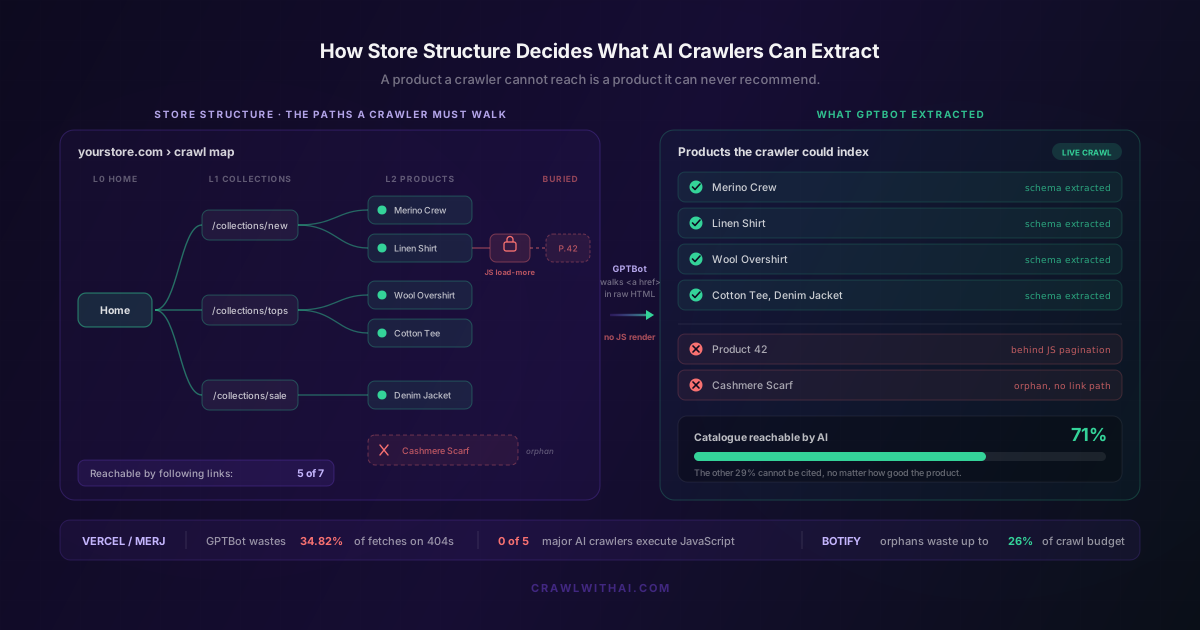
Your Shopify products are excellent but invisible. Here are the technical SEO issues silently killing your search rankings and AI recommendations.
Break down every element that separates a 1.4% conversion rate from a 4.2% one. From product titles to trust signals, here is what actually moves the needle.
Core Web Vitals directly impact your Shopify store's Google rankings and AI visibility. Learn how LCP, INP, and CLS scores affect traffic, conversions, and AI recommendations.
AI-referred visitors behave nothing like Google organic traffic. They convert higher, bounce less, and are nearly invisible in your analytics. Here is what you need to know.
73% of Shopify traffic is mobile, but mobile converts at half the rate of desktop. Here is why your mobile product pages bleed revenue and how to fix them.
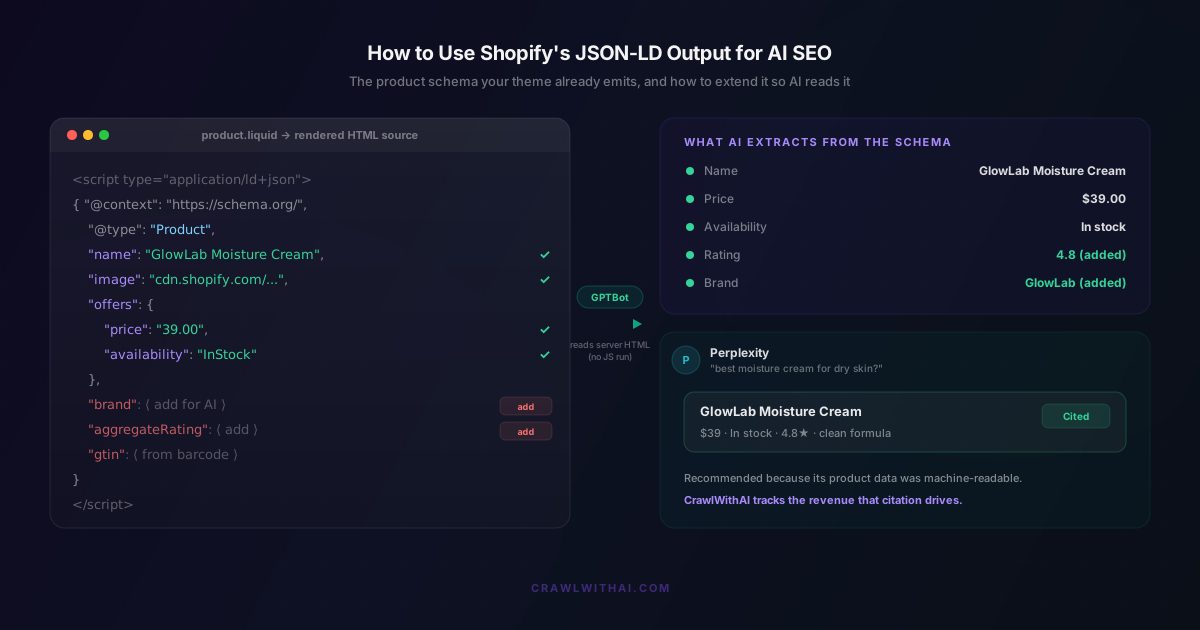
Structured data went from optional SEO bonus to the primary language AI engines use to understand your products. Here's what changed and why it matters.
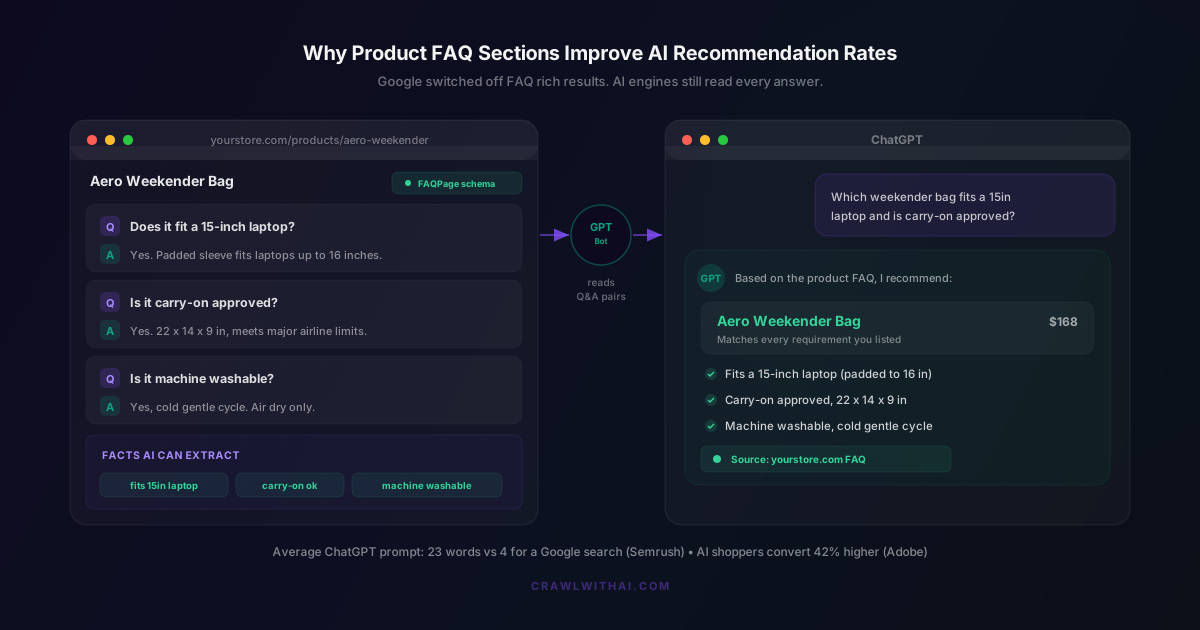
95% of Shopify product descriptions are generic filler. Learn the specific patterns that kill conversions and block AI recommendations, with fixes you can apply today.
Eight Shopify speed fixes that move Core Web Vitals, Google rankings, and AI recommendations together. Real data, named sources, copy paste ready.
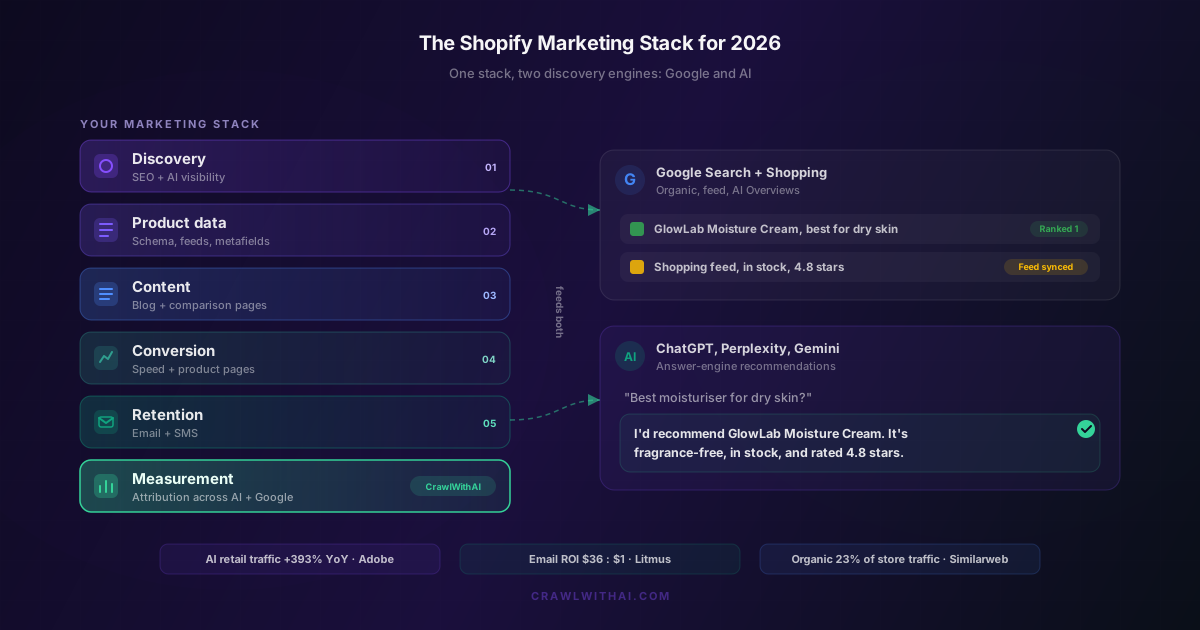
Your product feed now powers Google Shopping and AI recommendations from the same file. Here is the data on which fields move the needle on both channels.
AI shopping is real, but Google Shopping still drives most of e-commerce revenue in 2026. Here is the data, the overlap, and how Shopify stores should split focus.
AI shopping assistants quietly shift product recommendations by season. Here is how seasonal intent works inside ChatGPT, Perplexity, and Gemini, and how to ride it.
AI systems like ChatGPT and Perplexity often recommend small D2C brands over Fortune 500 companies. Here is why, and how your Shopify store can benefit.
Understand how ChatGPT, Gemini, and Perplexity balance cost against quality when recommending Shopify products.
Product reviews are one of the strongest signals AI systems use to recommend products. Here's why and what to do about it.
AI-native shopping is how customers discover products through conversations. Learn why traditional e-commerce discovery is changing and how to win.
Conversational AI is replacing traditional shopping funnels. Learn how to optimize for dialogue-based discovery and capture revenue from this shift.
Learn why AI systems deprioritize out-of-stock inventory and how real-time stock signals affect your Shopify store's visibility in ChatGPT, Perplexity, and Gemini.
Learn why ChatGPT, Perplexity, and Gemini recommend brands instead of products, and how to position your Shopify store accordingly.
ChatGPT now remembers your customer's purchase history and preferences. Here's what changes for repeat recommendations and how to optimize for it.
AI Overviews and AI Mode are different products with different visibility rules. Learn which one your Shopify store should optimize for.
Google Shopping traffic is declining as AI assistants handle product discovery. Learn why the shift matters and how to win in this new discovery channel.
Grok recommends products within X conversations. Learn which signals matter and how to get your Shopify store into Grok shopping results.
Gemini uses different signals than Google Search. Learn which Shopify optimization factors make stores visible to Google's AI and which are invisible.
Perplexity AI uses real-time web search and source citations to recommend products. Learn which ranking signals matter and how to get your Shopify store into Perplexity's answers.
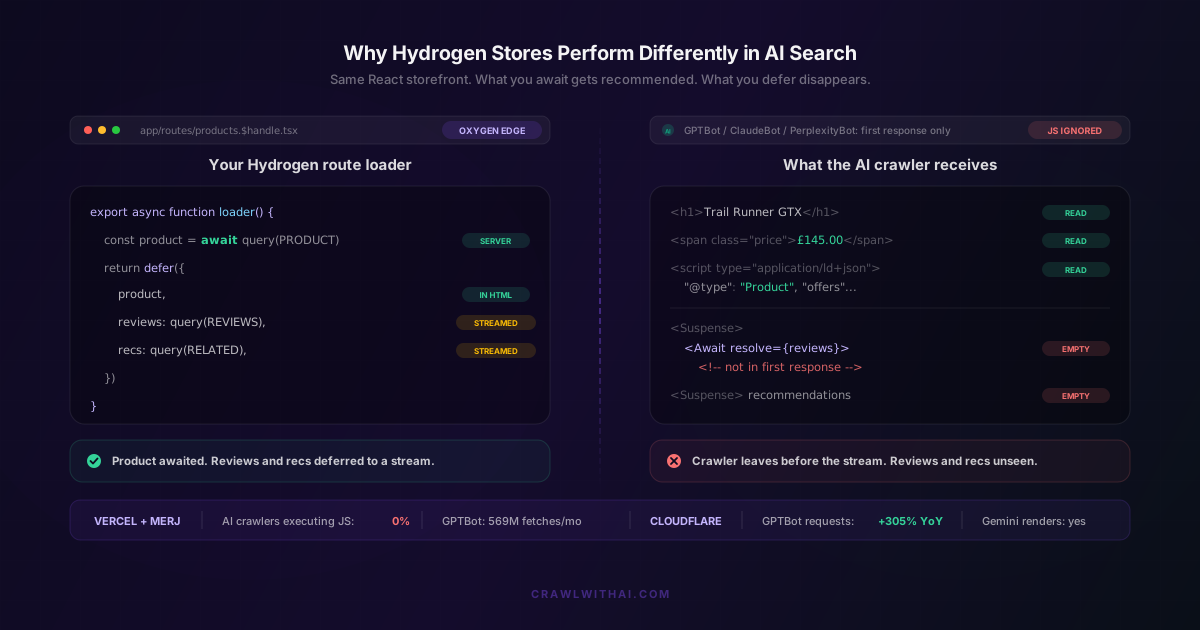
GPTBot sees your store differently than humans do. Here is what it extracts, what it ignores, and why your best product pages might be invisible to ChatGPT.
Google traffic is one channel. AI recommendations are becoming another. Here is what Shopify store owners need to know about the difference, and what it takes to show up in both.
Learn how ChatGPT decides which products to recommend, and what Shopify store owners can do right now to show up in those AI-powered answers.