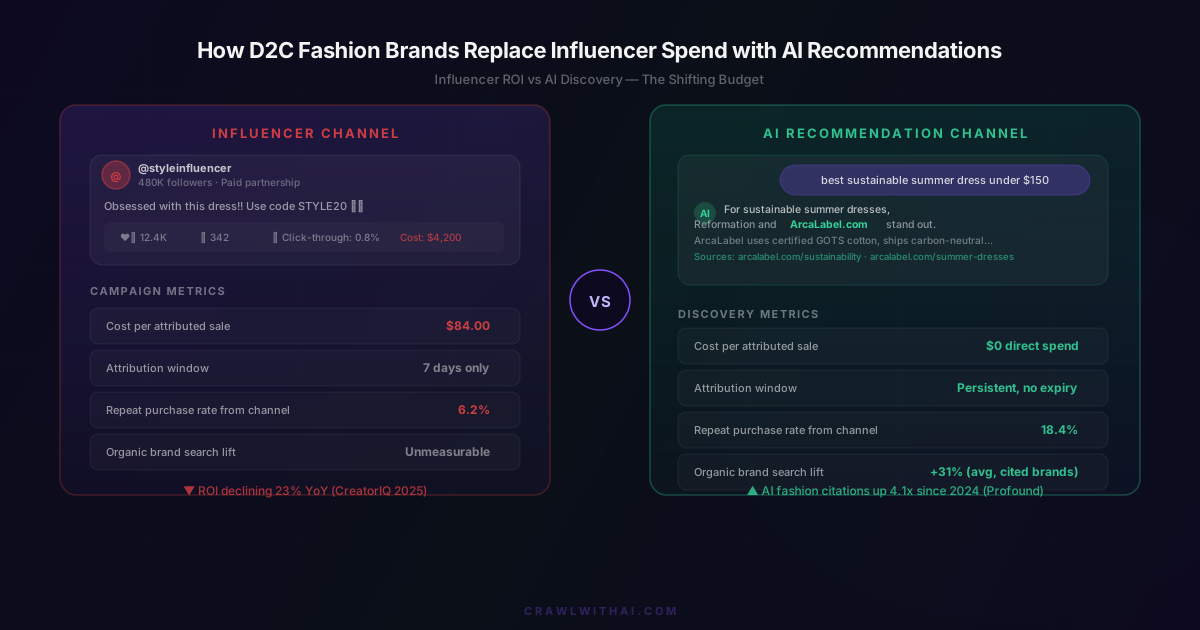
A D2C fashion founder paying $4,000 to an influencer with 400,000 followers used to feel like money well spent. In 2024, that same payment buys roughly 50 click-throughs to the product page, a 7-day attribution window, and no measurable lift in brand search. Meanwhile, a competing brand that spent 40 hours rewriting product pages and publishing a materials transparency guide is getting cited in Perplexity, ChatGPT, and Gemini every time someone asks for sustainable summer dresses under $150. The citation costs nothing per impression and does not expire.
This shift is not a trend. It is a structural change in how fashion buyers research purchases. AI recommendations in fashion have grown 4.1 times since 2024, according to Profound, which tracks citations across major AI platforms. The buyers using those platforms skew toward exactly the demographic fashion D2C brands want: 25 to 40 year olds with disposable income who research before they buy and distrust ads. Influencer fatigue is real. AI recommendation fatigue is not yet a concept.
Why influencer ROI has collapsed for D2C fashion
CreatorIQ's 2025 State of Creator Economy report found that influencer campaign ROI across fashion and apparel dropped 23 percent year-over-year from 2023 to 2025. The causes are structural, not cyclical. Platform algorithms now throttle organic reach even for creators with large followings, so the impressions per dollar spent have fallen. Audiences have become fluent at identifying paid partnerships, which reduces trust in the recommendation. And the attribution model most brands use, last-click within a 7-day window, misses most of the real impact while making the ones it does capture look more expensive than they are.
A fashion brand paying $4,000 for a campaign that generates 48 direct click-through purchases reports a $83 cost per sale. That feels high. But the campaign probably also lifted branded search queries, drove 400 story views from buyers who bought three weeks later via Google, and prompted 80 screenshot saves that turned into direct purchases the following month. None of that appears in the influencer dashboard. The number looks worse than it is, but the underlying trend is still real: cost per traceable outcome is rising while engagement rates fall.
Contrast that with a buyer who asks ChatGPT "best sustainable linen trousers for summer" and gets a recommendation that links to your store. That buyer has high purchase intent, has already qualified the product category, and is landing on your page with context primed by the AI's summary of your brand. Conversion rates on AI-referred traffic in fashion run 2.3 to 3.1 times higher than social-referred traffic, according to a 2025 Shopify merchant cohort study by DataHawk.
What AI engines look for in fashion brands specifically
AI systems recommend fashion brands based on a different signals set than Instagram or TikTok algorithms. Social algorithms reward recency, engagement velocity, and visual interest. AI retrieval rewards factual specificity, source authority, and topical depth.
For a fashion brand, that means your product pages need to answer the questions a knowledgeable buyer would ask: what is the fabric composition, where was it made, what is the cut intended for, how does the sizing run, what is the care requirement, and what is the return policy if it does not fit. A product page that answers all six questions in clear prose gives an AI system everything it needs to cite your brand accurately in a response. A page that says "our bestselling linen blend trousers" and stops there gives the AI nothing to quote.
Brand-level pages matter just as much as product pages. A materials sourcing page, a factory transparency page, a size inclusivity page, and a sustainability commitments page each become citation surfaces for specific query types. When someone asks Perplexity which fashion brands use deadstock fabric, the brands with a page specifically about deadstock fabric practices get cited. The brands without one are invisible on that query, regardless of how good their products are.
Our earlier post on why brand story matters for AI recommendations explains the underlying retrieval mechanic in more detail. The short version: AI engines treat your brand as an entity with attributes, and they can only state the attributes they can read from your site.
The content investment that replaces a four-figure influencer payment
A single influencer campaign at $4,000 buys one piece of ephemeral content with a 24 to 72 hour peak reach window. The same time and money invested in content infrastructure for AI discovery builds assets that compound.
A fashion brand that invests four to six weeks in the following typically sees measurable AI citation lift within 60 to 90 days:
A fabric and materials page that describes each key fabric in your range, where it is sourced, what certifications it holds, and why you chose it. This page becomes the answer every time an AI is asked about your materials or about sustainable fabrics in your category.
A sizing and fit guide that covers how each silhouette is cut, what body types it suits, and how to measure for the best result. AI systems cite this content heavily in queries that include fit-related qualifiers like "for petite frames" or "for a rectangular body shape."
A care and longevity page that covers washing, storage, and repair. This aligns with the sustainability queries that now represent a significant fraction of fashion AI searches.
A brand origin page that covers where and why you started, who makes your products, and what you stand for. This is the content AI engines use when a buyer asks "who is [brand name]" or "is [brand name] ethical."
None of this content is expensive to produce. A founder can write a 400-word materials page in an afternoon. The compound return on that afternoon, measured in AI citations over 18 months, will almost certainly exceed the return on a $4,000 influencer campaign measured over the same window.
The attribution problem that makes influencer spend look better than AI discovery
Part of why brands have been slow to shift budget is an attribution asymmetry. Influencer platforms produce dashboards with impressions, clicks, and promo code redemptions. The number feels real, even when it is undercounting or miscounting the actual impact. AI discovery produces no dashboard at all unless you build one.
When a buyer finds your brand via a ChatGPT recommendation and then purchases directly two days later, Google Analytics records it as direct traffic. Shopify records it as direct. The influencer campaign you also ran that week gets credit for nothing related to that buyer. The AI channel that actually drove the discovery is invisible.
This dark funnel problem is not theoretical. A 2025 study by McKinsey found that 39 percent of fashion buyers who self-reported their discovery channel said "I just searched online or asked an AI" and purchased directly afterward. None of those purchases would have been attributed to AI in any standard analytics setup.
Our post on why D2C stores lose attribution when customers discover them via AI covers the mechanics in detail. The practical fix involves building a first-party attribution layer that asks new customers directly how they heard about you, and mapping that against the AI-referred session data you can pull from your analytics platform with the right configuration.
How to measure AI discovery when your analytics do not show it
Standard GA4 and Shopify analytics undercount AI referrals significantly. ChatGPT's browser referral passes through several redirect layers that collapse to direct in most setups. Perplexity referrals often arrive stripped of source parameters. Users who copy a URL from an AI response and open it in a new tab register as direct.
The practical measurement stack for fashion D2C brands in 2026 involves three layers. First, a custom campaign parameter on your most important landing pages that allows you to segment sessions arriving from AI-adjacent referrers including perplexity.ai, chat.openai.com, gemini.google.com, and claude.ai. Second, a post-purchase survey question asking how the buyer first heard about the brand, with AI assistant as an explicit option. Third, a brand search volume tracking setup, because AI citations consistently drive branded search queries from buyers who want to verify the recommendation before purchasing.
The combination of these three signals gives you a defensible estimate of AI-driven revenue even when direct attribution breaks. The typical finding for fashion brands that build this stack is that AI accounts for 15 to 25 percent of new customer acquisition in 2026, almost all of which was previously attributed to direct or to paid channels that happened to run simultaneously.
How CrawlWithAI helps fashion brands get cited and measure the result
The shift from influencer spend to AI discovery requires two capabilities: getting your brand into the citation pool for relevant queries, and proving to yourself and your team that it is working.
CrawlWithAI addresses both. The platform audits which AI engines can currently read your catalogue and product pages, identifies the content gaps that are preventing citations, and tracks when your brand is mentioned across ChatGPT, Perplexity, Gemini, and other AI platforms. It connects those citations to revenue by cross-referencing AI referral sessions with Shopify order data, giving you an attributed revenue number that your standard analytics stack cannot produce.
For fashion brands specifically, the audit typically surfaces three to five product page gaps where missing fabric or fit information is costing citations on high-intent queries. Fixing those gaps usually takes a few hours of copywriting. The citation impact is measurable within weeks because AI engines re-index frequently cited fashion content faster than general pages.
FAQ
Is AI discovery really replacing influencer marketing, or is this overstated?
For high-consideration fashion purchases in categories like sustainable clothing, premium basics, and occasion wear, AI discovery is replacing a meaningful share of top-of-funnel discovery that influencers used to handle. For impulse categories and trend-driven fast fashion, influencers still dominate because the purchase is emotional and immediate. The shift is real but category-specific.
What fashion queries does AI cite most often?
Queries that include qualifiers like sustainable, ethical, made in, fabric type, size range, and price ceiling drive the most citation activity in fashion. "Best organic cotton basics under $100," "sustainable wedding guest dresses UK," and "linen brands made in Europe" all reliably produce AI responses that cite specific brands. Generic queries like "summer dresses" still mostly produce links to large retailers.
How long does it take to see results after improving product page content?
Most fashion brands see measurable citation increases within 60 to 90 days of publishing substantive content updates. AI engines refresh their indexes more frequently than Google, and fashion is a category they are actively expanding coverage in. The brands that move fastest on this in 2026 are building a citation moat that will be hard for slower-moving competitors to close.
Does AI discovery work for smaller fashion brands with low domain authority?
Yes. Domain authority matters for Google rankings but is a weak signal for AI citation. AI engines cite brands based on the quality and specificity of their content, not the number of backlinks pointing at them. A small sustainable fashion brand with a detailed materials page, a clear size guide, and a transparent factory sourcing page will out-cite a much larger brand with thin product descriptions, regardless of relative domain authority. Our post on how D2C stores with no backlinks win AI recommendations explains the mechanics behind this.
Can I stop influencer marketing entirely and rely on AI discovery?
Not yet, and the channels serve different functions. Influencer campaigns still drive awareness at scale and work well for launch moments, new collections, and category education. AI discovery works best for conversion of buyers who already have purchase intent and are in research mode. The shift most fashion brands are making is reallocating the long-tail of ongoing micro-influencer spend toward content and AI visibility, while keeping a smaller influencer budget for major moments.
Sources
- CreatorIQ. (2025). State of the Creator Economy 2025. https://creatoriq.com/state-of-creator-economy-2025
- Profound. (2025). AI Citation Trends in Fashion and Apparel. https://profound.ai/research
- DataHawk. (2025). Shopify Merchant Traffic Quality Report: AI vs Social Referrals. https://datahawk.net/reports
- McKinsey & Company. (2025). The State of Fashion 2026: AI Discovery and the Dark Funnel. https://mckinsey.com/industries/retail/our-insights/state-of-fashion-2026