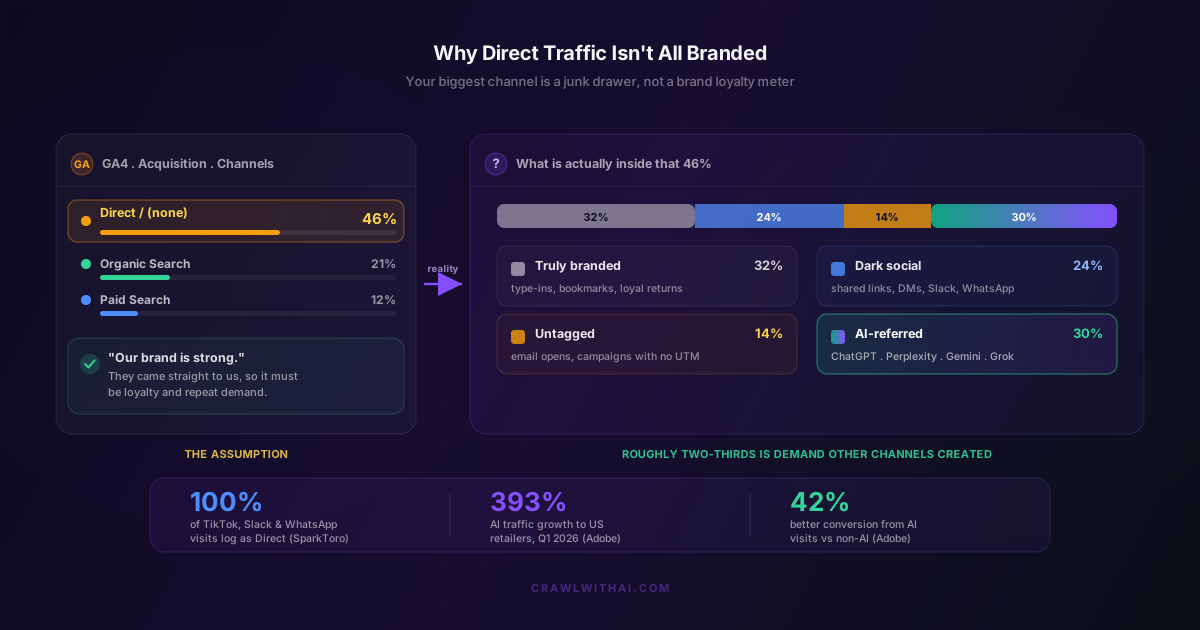
A founder opens Google Analytics on Monday and sees the same thing they see every week. Direct traffic is the biggest channel, 46 percent of sessions, larger than organic and paid search combined. The read feels obvious. People are skipping Google and coming straight to the store, which means the brand is strong and demand is loyal. So the budget shifts away from acquisition and toward protecting the brand, and the board deck gets a slide that calls direct traffic proof of pull.
Here is the catch. Direct is not a brand strength meter. It is the label analytics writes down when it cannot figure out where a visit came from. A large and growing part of that 46 percent is dark social and AI referrals, people an assistant or a group chat just introduced to your store for the first time. Treat all of it as branded and you credit your brand for demand that other channels created, then quietly starve the channels doing the actual work.
What Branded Traffic Actually Means
Branded traffic is demand from people who already know you and want you specifically. They type your domain from memory, click a bookmark, or search your name. That behaviour is the payoff of brand equity you already built, and it looks distinct in the data. Branded visitors show high intent, skew toward returning users, tend to land on your homepage or a page they have seen before, and convert well. One 2025 analysis of branded versus non-branded traffic put branded conversion at 5 to 8 percent against 2 to 3 percent for non-branded visits, which is why a real branded cohort stands out.
Direct traffic was supposed to be a rough proxy for that. If someone arrives with no referrer, the thinking went, they must have navigated to you on purpose, which implies they already knew the brand. That logic worked when the web was simpler and most sharing happened through links that passed a clean source. It does not hold now, and the gap between what Direct implies and what it contains is where the money leaks out.
Why Direct Traffic Became a Stand-In for Brand Strength
The assumption is easy to reach. No referrer means the browser did not arrive from a recognisable link, so the visitor must have come on their own, so they must already know you. Dashboards reinforce the story by parking Direct at the top of the channel list with a tidy name and a big number next to it. It feels like a scoreboard for how many people love you enough to come without prompting.
The flaw is that "no referrer" and "typed your URL" are not the same event. Analytics files a session as Direct whenever it has nothing to read, and that happens for many reasons that have nothing to do with brand recall. Google's own documentation is blunt about this. Direct is the fallback category, assigned when a session has no source information, not a confirmed sign that someone sought you out. The label describes what the tool does not know. Founders read it as something the visitor intended.
What Is Actually Sitting in Your Direct Traffic
Once you stop reading Direct as loyalty, the contents get clearer. A shared link in Slack, WhatsApp, or a private DM arrives with the referrer stripped, so it lands in Direct even though it is really dark social discovery. Email opens and campaigns without proper UTM tags land there too. So does a lot of mobile app traffic. SparkToro proved how leaky the bucket is in a controlled 2023 study of real visits across 11 networks. Every visit from TikTok, Slack, Discord, Mastodon, and WhatsApp, 100 percent of them, logged as Direct with no referral information at all. SparkToro also noted that 95 percent of its own site traffic shows up as Direct, a figure it knows is not true.
None of that is brand loyalty. Someone forwarding your product link into a group chat is a fresh introduction, not a repeat buyer. The person who tapped a link in an untagged newsletter came from a channel you paid to build. The bucket you read as evidence of pull is mostly evidence that your tracking lost the trail. This is the same measurement gap we cover in why UTM parameters break when traffic comes from ChatGPT, applied to your single largest channel.
How AI Turned the Branded Assumption Upside Down
The newest and fastest-growing thing in the Direct bucket is AI. When ChatGPT, Perplexity, Gemini, or Grok recommends your store, the shopper clicks through, and the referrer usually gets stripped on the way, so the visit lands in Direct. The important part is who that visitor is. The assistant recommended you to someone researching a purchase, often someone who had never heard of your brand before the conversation. That is a first-touch introduction to a stranger, the exact opposite of the loyal repeat buyer the Direct label implies.
The volume is no longer small. Adobe, whose data covers more than a trillion visits to US retail sites, found that AI traffic to those sites grew 393 percent year over year in the first quarter of 2026, and its survey showed 39 percent of consumers have already used AI for online shopping. These are new buyers arriving through a discovery channel, and they are landing in the pile you call branded. Worse for the misread, they are your best visitors. Adobe measured AI traffic converting 42 percent better than non-AI traffic in March 2026 and generating 37 percent higher revenue per visit. So the most valuable slice of your Direct number is often your newest demand, not your most loyal. We go deeper on this in why Shopify's built-in analytics misses your AI-referred orders.
The Decisions That Break When You Treat Direct Traffic as Branded
This would be a harmless labelling quirk if nobody acted on it. People act on it constantly, and a wrong Direct read bends real decisions. The first is crediting the wrong thing. When Direct climbs, brand campaigns and retention email look like the cause, so they get more budget, even when the lift actually came from AI recommendations and shared links those campaigns never touched.
The second is under-investing in discovery. If leadership believes customers already come straight to the store, top-of-funnel spend looks optional, so the content, product data, and AI visibility work that generate the demand gets cut first. You defund the engine and congratulate the flywheel. The third is a distorted view of your customer base. A big returning-looking Direct number suggests a mature, loyal audience, which quietly inflates your assumptions about lifetime value and retention while hiding how dependent you are on fresh first-time buyers. Each of these is the same error that makes last-click attribution miss most of your AI-driven revenue, except here it hides inside the channel you trust most.
How to Test Whether Your Direct Traffic Is Really Branded
You cannot recover a referrer that was never sent, but you can pressure-test the branded claim with behaviour. Start with new versus returning. Truly branded traffic skews returning, because people who navigate straight to you usually already know you. If your Direct cohort is mostly new visitors, it is not loyalty, it is disguised discovery.
Check landing pages next. Branded and loyal visitors tend to land on your homepage or a page they have seen before. A deep product or collection URL that no one types from memory means someone handed them that exact link, which points to AI or a shared message. Then compare trends. If branded search volume in Search Console is flat while Direct keeps climbing, the growth is not coming from more people remembering your name. Layer in device and geography if you want more confidence, since a surge from mobile app users often signals AI apps rather than desktop bookmarks. None of these tests labels every session perfectly, but together they tell you whether your Direct is brand equity or something else wearing its badge. Our guide on setting up AI traffic attribution in Google Analytics 4 walks through building these segments, and the fuller behavioural breakdown lives in the difference between AI-referred sessions and direct traffic.
How CrawlWithAI Separates Brand Demand From AI-Created Demand
CrawlWithAI approaches this from the AI side rather than the browser side. Instead of waiting for a session to arrive and trying to rebuild a source from a referrer that was already deleted, it monitors when ChatGPT, Perplexity, Gemini, and other assistants mention and recommend your store, tracks which of those recommendations drive clicks, and ties that activity back to orders in your Shopify store. The AI-created demand that normally disappears into Direct gets counted as what it is, new demand an assistant produced, sitting separately from the genuine branded traffic you earned.
That separation matters because the AI channel is both large and easy to under-serve. Adobe found the average US retail homepage is only 75 percent readable by large language models, and individual product pages score just 66 percent, meaning a third of the content on the pages that sell your goods is invisible to the models deciding what to recommend. If you cannot see how much of your Direct traffic is really AI, you cannot tell that you are leaving those recommendations on the table. Seeing the split is the first step to fixing the product data and content that earn them.
FAQ
Is direct traffic the same as branded traffic? No. Branded traffic comes from people who already know you and seek you out, through type-ins, bookmarks, or searches for your name. Direct is simply the bucket analytics uses when it cannot identify a source. Some direct traffic is genuinely branded, but a large share is dark social, untagged campaigns, and AI referrals that have nothing to do with brand recall.
How much of my direct traffic is actually branded? It varies by category and audience, but the truly branded slice is usually smaller than founders assume. Industry analyses put unattributed AI and referral traffic at roughly 15 to 35 percent of a typical site's Direct, and dark social adds more on top of that. The safest move is to test it with behaviour rather than trust the label.
Why does AI traffic show up as direct instead of its own channel? Because the referrer gets stripped in transit. Many AI platforms add a no-referrer attribute to outbound links, their mobile apps open pages in an in-app browser that drops the source, and people often copy and paste a link from an answer into a new tab. With no source to read, analytics defaults the visit to Direct.
Does a rising direct traffic number mean my brand is getting stronger? Not necessarily. A rising Direct number can mean more shared links, more untagged email, or more AI recommendations, all of which are growth from other sources rather than brand recall. If your branded search volume is not rising alongside Direct, the increase is probably not coming from brand strength.
How can I separate branded direct from AI-referred direct? Use behavioural signals in analytics, since AI-referred visits skew new, land on deep product URLs, and browse longer than a quick bookmark click. For a cleaner count, track from the AI side by monitoring when assistants recommend your store and tying those recommendations to orders, which is the approach CrawlWithAI takes.
Sources
- SparkToro, New Research: Dark Social Falsely Attributes Significant Percentages of Web Traffic as Direct: https://sparktoro.com/blog/new-research-dark-social-falsely-attributes-significant-percentages-of-web-traffic-as-direct/
- Adobe, AI Traffic Grows but Retail Sites Lag in AI Search Visibility (April 2026): https://business.adobe.com/blog/ai-traffic-surge-retail-sites-not-machine-readable
- TechCrunch, AI Traffic to US Retailers Rose 393% in Q1, and It Is Boosting Their Revenue Too (April 2026): https://techcrunch.com/2026/04/16/ai-traffic-to-us-retailers-rose-393-in-q1-and-its-boosting-their-revenue-too/
- Google Analytics Help, Default Channel Group and How Traffic Is Assigned: https://support.google.com/analytics/answer/9756891
- Uniek Digital, Branded vs Non-Branded Traffic: Which Drives Better Conversions (2025): https://uniekdigital.com/blog/branded-vs-non-branded-traffic-which-drives-better-conversions-complete-guide-2025/