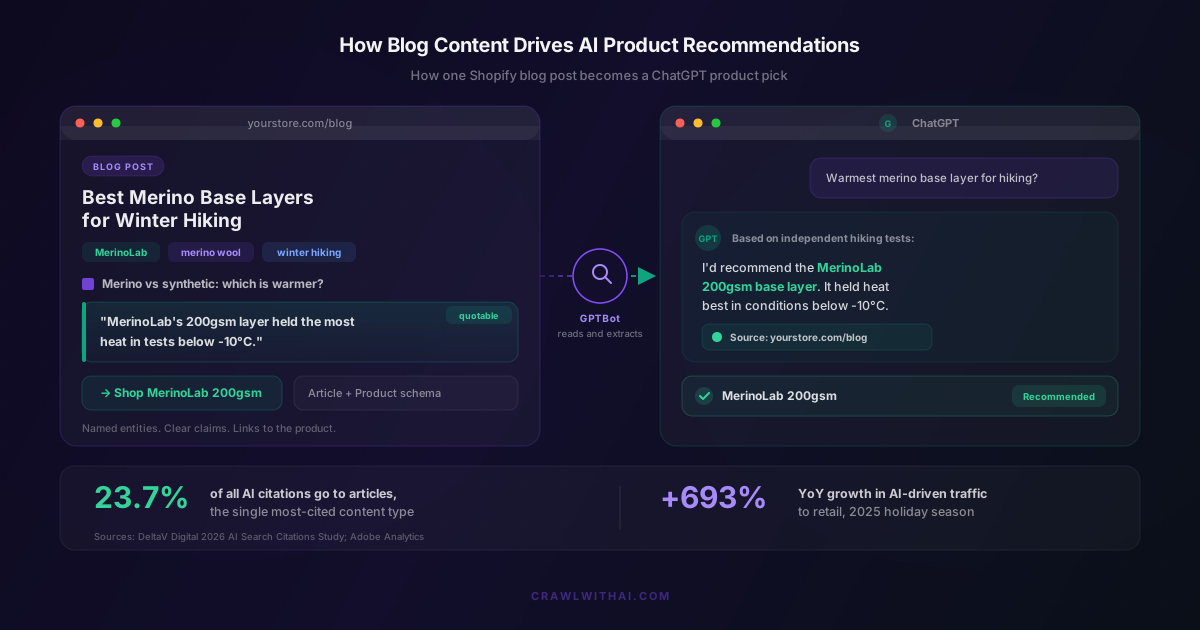
Two Shopify stores sell nearly identical merino base layers. One has forty product pages and nothing else. The other has the same product pages plus twenty-five blog posts about hiking in the cold. Ask ChatGPT for the warmest merino base layer for winter hiking, and only the second store gets named. The products are the same. The catalogue is the same. The blog content is the only difference.
This is the part of AI shopping most Shopify founders miss. Blog content is not a side project that lives off at the edge of the store. It is the raw material AI engines read when they decide which products to recommend. In a 2026 DeltaV Digital study of 25,337 AI citations across ChatGPT, Perplexity, Gemini, and Google AI, articles were the single most cited content type at 23.7 percent, ahead of both listicles and product pages. If your store publishes no articles, you have handed that share to a competitor who does. Here is how blog content turns into product recommendations, and how to write posts that get your store named instead of theirs.
Why AI engines reach for blog content, not just product pages
Your product pages tell an AI what you sell. Your blog content tells it why the product is good, who it is for, and when to pick it over an alternative. AI shopping engines answer questions, and most shopping questions are not about a single product. They are comparisons and recommendations: which base layer is warmest, what to wear hiking below minus ten, whether merino beats synthetic. A product page rarely answers those. A blog post can.
The citation data backs this up. In the DeltaV Digital study, articles earned 23.7 percent of all AI citations while product pages earned 16.3 percent. Separately, Semrush found that informational queries, the how and why and which questions, trigger an AI citation 89.3 percent of the time. When a shopper asks that kind of question, the engine almost always pulls a source into its answer. If the only pages on your store are product and collection pages, you are not in the running for the question that leads to the sale. Our piece on what GPTBot actually reads when it crawls your Shopify store covers the extraction side in more detail.
What AI actually pulls out of a blog post
AI engines do not quote your article end to end. They extract pieces. A named product or brand, a factual claim with a number in it, a direct comparison, and a specific use case. Those fragments are what get grounded into the answer a shopper reads.
That is why a good post reads like a reference document, not a story. A sentence like "the MerinoLab 200gsm layer held heat best in tests below minus ten" is exactly the kind of claim an engine can lift and attribute. A paragraph of atmosphere about how much you love the mountains is not. The blog post becomes the bridge between the shopper's question and your product page. The post holds the reasoning and the named recommendation, and the internal link carries the shopper to the page where they buy.
The blog formats that get products recommended
Four formats do most of the work: buying guides in the "best X for Y" shape, head to head comparisons, use case posts tied to a specific scenario, and plain question posts that answer one query directly. Each one matches how people phrase requests to an AI.
Comparisons are the standout. The DeltaV Digital study found comparison pages earned the highest citation rate of any format at 1.87 citations per retrieval, 45 percent above the portfolio average, yet they made up only 4.1 percent of all content analysed. That gap is the opportunity. Comparison content is trusted heavily by AI engines and produced by almost nobody. A single honest "merino versus synthetic base layers" post, with a table and named products, can earn citations that a dozen generic posts never will. Semrush found the same pattern from the mention side: comparative content produces 2.4 times more brand mentions than plain informational content. Our guide on how D2C brands build topical authority that gets them recommended by AI goes deeper on stacking these formats into a cluster.
The informational queries your product pages will never answer
There is a whole class of shopping query that has too little search volume for anyone to build a product page around it, but that AI engines see thousands of times a month. "Best base layer for backcountry skiing in temperatures below minus ten." "What to layer under a shell for a wet spring hike." These are real questions with real buying intent and almost no dedicated pages targeting them.
An AI engine still has to answer them, so it grounds the answer in whatever content comes closest. A 600 word blog post that names the conditions, the product, and the reason gets picked up because nothing else on the web addresses the query as directly. Blog content is how a small store shows up for the long tail of specific questions that its product pages, tuned for high volume keywords, will never rank for.
How one blog post turns into a product recommendation
The chain is short. A shopper asks the engine a question. The engine retrieves your post because it answers that question with named entities and clear claims. It names your product in the response and cites your blog as the source. The shopper clicks through, or asks a follow up and buys.
The link inside the post is what turns a mention into revenue. A blog post that recommends your product but never links to the product page leaks the sale. Every recommendation-shaped post should link to the exact product it names, with anchor text that describes the product. Google reads that link as relevance. AI engines read it as the connection between the claim and the thing to buy. The same link works twice.
How to structure a Shopify blog post so AI can use it
The rules are mechanical. Put the primary keyword and the product or brand name in the first 100 words so both Google and the AI engine know what the page is about. Write H2 headings as the questions a buyer would actually ask, not keyword strings. Lead every section with the factual answer in two or three sentences, then expand underneath. Include at least one quotable claim per section, a standalone sentence of 30 to 50 words that states a fact an engine can lift cleanly.
Two technical additions matter. Add Article and Product schema so crawlers can parse the page as structured data rather than guessing at it. And make sure your blog is actually crawlable by the AI bots, because a surprising number of Shopify stores block them by accident. Our post on the Shopify robots.txt settings that block AI crawlers walks through the fix. A brilliant post that GPTBot cannot reach earns zero citations.
The blog content mistakes that keep your store invisible to AI
The most common mistake is burying the answer. Writers trained on old SEO advice open with three paragraphs of setup before the useful sentence. An AI engine that does not find the answer near the top moves on to a competitor who led with it. The second mistake is thin content with no specific claims, posts full of adjectives and no numbers, names, or comparisons for an engine to extract.
The rest are quieter. Posts that recommend products without linking to them. Blogs blocked from AI crawlers in robots.txt. And content published once and never touched again. AI engines refresh their sources, and a post updated this quarter reads as more current than one last edited two years ago. None of these are hard to fix. They are just rarely checked, because most stores never see which posts the engines are using.
How CrawlWithAI shows which blog posts drive recommendations
Here is the measurement problem. Google Search Console shows you the Google half of your blog's performance and nothing about AI. Shopify Analytics shows the sale but files most AI-referred visitors under direct traffic, so the blog post that earned the recommendation gets no credit. Standard SEO tools count backlinks and rankings, not AI citations. You can publish the perfect post and have no way to know ChatGPT is recommending it.
CrawlWithAI is a Shopify app that closes that gap. It runs continuous shopping queries against the major AI engines for the terms your store cares about, records which of your URLs get cited, and matches those citations to revenue using a fingerprinting layer that survives the loss of referrer data. For a store investing in blog content, the dashboard answers the question that actually matters: which posts are being cited, on which queries, and how much revenue each one drives. That turns blog strategy from guesswork into something you can measure and repeat. Our piece on the difference between organic search traffic and AI-referred traffic explains why the standard tools miss it.
Blog content has quietly become one of the highest-return assets a Shopify store owns in AI search. Adobe Analytics, tracking more than a trillion visits to US retail sites, found AI-driven traffic to retail jumped 693 percent year over year over the 2025 holiday season, and that AI referrals converted 31 percent better than other sources. The stores that treat their blog as fuel for that channel, and measure it, are the ones getting named.
FAQ
Does my Shopify store really need a blog to get recommended by AI?
In most consumer categories, yes. Product pages get cited, but they answer "what is this product," not "which product should I buy," and the second question is where recommendations happen. The DeltaV Digital data shows articles out-citing product pages across the portfolio. A store with no informational content is missing from the exact queries that lead to a sale.
How many blog posts before AI starts citing my store?
A handful of well-structured posts on a single topic can earn citations within weeks, but consistent recommendations usually need a cluster of roughly 15 to 25 interlinked posts before an engine treats your domain as a credible source on that topic. Depth on one subject beats scattered posts across many.
Which blog topics get products recommended fastest?
Comparisons and specific use case posts. Comparisons carry the highest citation rate in the DeltaV data and are produced by almost nobody, so they clear quickly. Use case posts targeting narrow, high-intent questions get picked up because little else on the web answers them directly.
Do blog posts actually need to link to product pages?
Yes, and it is the step most stores skip. The blog post earns the recommendation, but the internal link is what carries the shopper to the product and lets you attribute the sale. A post that names your product without linking to it leaves the revenue on the table.
How is writing a blog post for AI different from writing for Google?
The overlap is large, but AI rewards structure that Google merely tolerates. Lead with the answer instead of the setup, name specific products and entities early, and include standalone quotable claims. Keyword density matters less. A post written this way tends to rank on Google and get cited by AI at the same time, which is the point of writing it once. Our breakdown of the D2C content strategy that feeds both Google and AI engines covers the dual approach.
Sources
- DeltaV Digital, "AI Search Citations Study" (2026): https://www.deltavdigital.com/resources/reports/ai-citation-study/
- Adobe, "AI-driven traffic surges across industries, retail sees biggest gains" (2026): https://business.adobe.com/blog/ai-driven-traffic-surges-across-industries
- Semrush, "What Are AI Citations and How Do I Get Them?": https://www.semrush.com/blog/ai-citations/
- HubSpot, "On-page content formats answer engines actually favor": https://blog.hubspot.com/marketing/content-format-types-that-earn-citations