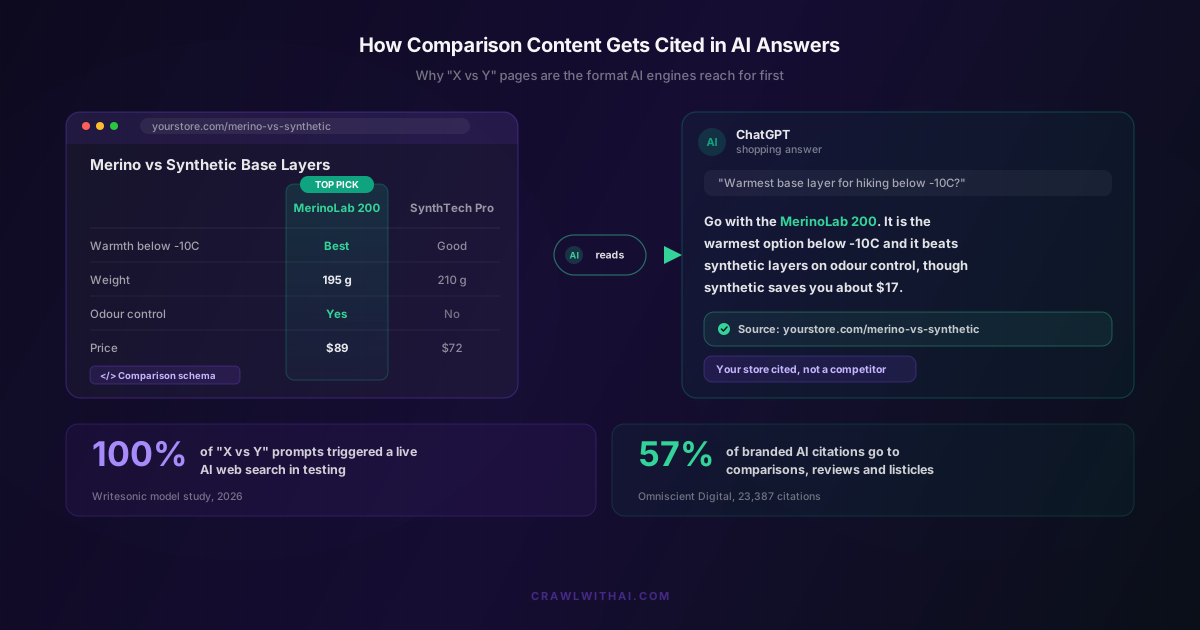
Two Shopify stores sell the same merino base layer. One has a product page and nothing else. The other has that product page plus a single article titled "Merino vs Synthetic Base Layers," with a table, named products, and a clear verdict. Ask ChatGPT which base layer is warmest for hiking below minus ten, and only the second store gets named and cited. The product is identical. The comparison content is the only difference.
That is the pattern most founders miss. AI shopping engines answer decision questions, and a decision question is a comparison by definition. "Which is better," "what is the best for," "X or Y," these are not edge cases. They are how people shop through ChatGPT, Perplexity, and Gemini. A 2026 Writesonic study of ChatGPT models found that prompts phrased as "X vs Y" triggered a live web search 100 percent of the time. Comparison content is the format those searches reach for. Here is why it gets cited, and how to build the "versus" pages that get your store named instead of a competitor's.
Why AI engines treat comparison content differently
Most content sits and waits to be found. Comparison content forces the engine to go looking. When a shopper asks an AI to compare two options, the model does not answer from memory. It runs a live search, because a comparison is a factual claim it has to verify. The Writesonic testing found that comparison-structured prompts, along with prompts that carried a price limit or a year, triggered a web search every single time. That is the moment your page can enter the answer. If you have no comparison page, the engine still runs the search. It just grounds the answer in someone else's.
There is a second reason. AI engines break a question into smaller sub-queries before they search, a process Google calls query fan-out. A prompt like "best base layer for winter hiking" fans out into things like "merino vs synthetic base layer" and "warmest base layer under 100 dollars." Your product page, tuned for one head keyword, rarely matches those sub-queries. A comparison page written around the exact question does. Our piece on what GPTBot actually reads when it crawls your Shopify store covers how the engine pulls those fragments out.
What actually counts as comparison content
Comparison content is any page whose job is to help someone choose between options. Four shapes cover most of it. Head-to-head pages that put two named products side by side, "X vs Y." Best-of roundups that rank several products for a specific use, "best X for Y," with a table. Alternatives pages that position your product against a category leader, "alternatives to [incumbent]." And category comparisons that weigh two types of product, "merino vs synthetic," "gas vs electric."
The common thread is a structured, honest verdict. A page that lists features with no opinion is a spec sheet. A page that says which option wins, for whom, and why, is comparison content. That distinction matters because the engine is trying to answer "which should I buy," and only the second kind of page answers it.
Why AI reaches for the versus page, not your product page
Your product page tells an AI what you sell. Your comparison page tells it which product to pick and why, which is the question the shopper actually asked. So the engine cites the comparison.
The citation data is blunt about this. Omniscient Digital analysed 23,387 AI citations and found that for branded queries, 57 percent of citations went to reviews, listicles, forums, and case studies. Product pages took 12 percent. Plain thought-leadership posts took 5.4 percent. Comparisons and roundups, the content built to weigh options, dominate the exact queries that sit closest to a purchase. A store with great products and no comparison content is invisible at the decision point. Our breakdown of how blog content drives AI product recommendations shows the same effect across formats.
The anatomy of a comparison page AI will cite
Lead with the verdict. Do not open with 400 words of background. State which option wins and for whom in the first two sentences, then support it underneath. Kevin Indig's analysis of 1.2 million ChatGPT answers found that 44.2 percent of citations come from the first 30 percent of a page. The engine reads the top and often stops there. If your verdict is buried at the bottom, it never gets extracted.
Then make the page dense with the things engines lift: specific numbers, named products, and cited claims. A Princeton-led study called GEO: Generative Engine Optimization tested what actually raises a page's visibility in AI answers, and found that adding statistics, quotations, and cited sources lifted it by up to 40 percent. Comparison content is naturally full of all three. "The MerinoLab 200 held heat best in tests below minus ten, at 195 grams against the synthetic's 210" is a sentence an engine can quote and attribute. "It is really warm and cosy" is not.
Put the comparison in a real table, in HTML text, not a screenshot. The engine reads a table as structured rows it can pull cell by cell. It reads an image of a table as nothing.
The comparison formats that earn the most citations
If you build one thing, build an honest "X vs Y" between the two options your buyers actually agonise over. It answers the highest-intent question in your category, and almost nobody writes it well.
After that, a "best X for Y" roundup with a real comparison table earns citations across a whole cluster of long-tail queries. These are the specific questions, "best base layer for backcountry skiing below minus ten," that have too little search volume for a dedicated product page but that AI engines see thousands of times a month. A 700-word comparison that names the conditions, the products, and the reason gets picked up because nothing else on the web answers the query as directly. Our guide to how D2C brands build topical authority covers stacking these into a cluster.
Alternatives pages are the third format worth building, especially if you compete with a well-known incumbent. Shoppers ask AI for "alternatives to [big brand]" constantly, and a page that answers it honestly puts your store in front of demand you did not have to create.
Write comparisons AI trusts, which means naming where you lose
The instinct is to make your product win every row. Do not. An engine can tell the difference between a comparison and an advert, and the balanced page is the one it trusts. If the synthetic layer is cheaper, say so. If a competitor wins on weight, say so, then explain who should still pick you and why.
That honesty is also what makes the page useful to the engine's answer. AI recommendations lead with trade-offs, "warmer but pricier," "lighter but less durable," because that is how a good recommendation reads. A page that already contains those trade-offs hands the engine its answer pre-written. A page that claims to win everything gives it nothing to work with and reads as promotional. Third-party signals reinforce this. A Seer Interactive study of 800,000 AI responses found that brands with a verified, active review profile were cited far more often than brands without one, a median citation rate of 53.5 percent against roughly 1 percent. Cite real reviews and real specs in your comparison, not adjectives. Our piece on the role of product reviews in AI recommendations goes deeper, and how AI weighs price against quality explains why stating the trade-off matters.
Make the comparison machine-readable and linked
Two technical steps decide whether the work pays off. First, the page has to be crawlable. A surprising number of Shopify stores block AI bots by accident in robots.txt, and a comparison page GPTBot cannot reach earns zero citations. Our post on the Shopify robots.txt settings that block AI crawlers walks through the fix.
Second, add structured data so the engine parses the page instead of guessing at it, and link every product you name to its product page with descriptive anchor text. The schema helps the crawler classify the comparison table. The internal link carries the shopper from the recommendation to the thing they buy, and lets you attribute the sale. Our guide to using Shopify's JSON-LD output for AI SEO covers the markup. The link and the schema do double duty, one job for Google, one for the AI engine.
How CrawlWithAI shows which comparison pages get cited
Here is the measurement gap. You can publish the perfect "X vs Y" page and have no idea whether ChatGPT is citing it. Google Search Console shows the Google half and nothing about AI. Shopify Analytics files most AI-referred buyers under direct traffic, so the comparison page that earned the recommendation gets no credit. Standard SEO tools count backlinks and rankings, not AI citations.
CrawlWithAI is a Shopify app built to close that gap. It runs continuous shopping queries against ChatGPT, Perplexity, and Gemini for the terms your store cares about, records which of your URLs get cited, and matches those citations to revenue with a fingerprinting layer that survives the loss of referrer data. For a store investing in comparison content, that answers the only question that matters: which "versus" pages are being cited, on which queries, and how much revenue each one drives. It turns comparison strategy from a guess into something you can measure and repeat. Our piece on organic search versus AI-referred traffic explains why the standard tools miss it.
The payoff is real money, not just visibility. Adobe Analytics, tracking more than a trillion visits to US retail sites, found that traffic from generative AI jumped 693 percent year over year over the 2025 holiday season, and that AI-referred shoppers converted 31 percent better than other sources. By March 2026, Adobe put that conversion gap at 42 percent. Comparison content is how you get in front of those shoppers at the moment they are choosing.
FAQ
What is comparison content for AI search?
It is any page whose job is to help a shopper choose between options, built so an AI engine can extract the verdict. That means head-to-head "X vs Y" pages, "best X for Y" roundups with a table, and "alternatives to [brand]" pages. The defining feature is a clear, honest verdict backed by specific numbers, not a neutral spec sheet.
Why does AI cite comparison pages more than product pages?
Because AI answers decision questions, and a product page does not answer "which should I buy." Omniscient Digital found 57 percent of branded AI citations go to reviews, listicles, and comparisons, against 12 percent for product pages. The comparison page sits at the exact point where the shopper is choosing, so the engine reaches for it.
Should my comparison show my product losing on some points?
Yes. A balanced comparison is the one AI trusts and the one that reads as useful rather than promotional. Name where a competitor wins, then explain who should still pick you. AI recommendations are built on trade-offs, so a page that already states the trade-offs hands the engine its answer.
How many comparison pages does my store need?
Start with one strong "X vs Y" on the decision your buyers agonise over most, then add "best X for Y" roundups for your main use cases. A handful of well-built, interlinked comparison pages usually does more than dozens of thin posts, because depth on one topic is what makes an engine treat your store as a credible source.
Do comparison pages help Google rankings too?
Yes. The same page that leads with a verdict, uses a real table, and cites specifics tends to rank on Google and get cited by AI at once. You are writing it once and earning from both channels, which is the point.
Sources
- Passionfruit, "How LLMs Search for Citations: What They Find" (2026), reporting Writesonic, Omniscient Digital, and Kevin Indig data: https://www.getpassionfruit.com/blog/how-llms-search-for-citations-what-they-look-for-and-what-they-actually-find
- Aggarwal et al., "GEO: Generative Engine Optimization" (Princeton, Georgia Tech, Allen Institute for AI): https://arxiv.org/abs/2311.09735
- Adobe, "AI-driven traffic surges across industries, retail sees biggest gains" (2026): https://business.adobe.com/blog/ai-driven-traffic-surges-across-industries
- Seer Interactive, "Study of 800K AI Responses: How Review Profiles Shape Brand Presence in AI Search": https://www.seerinteractive.com/insights/study-of-800k-ai-responses-how-reviews-shape-brand-presence-in-ai-search