Open your billing page and count the tools. An SEO app, an email platform, a reviews widget, a feed manager, a page builder, an analytics add-on. Most Shopify founders are paying for eight or ten of these, and almost none can say which ones still earn their keep. The reason is that the ground moved. Your buyer no longer starts at one search box. They start at two.
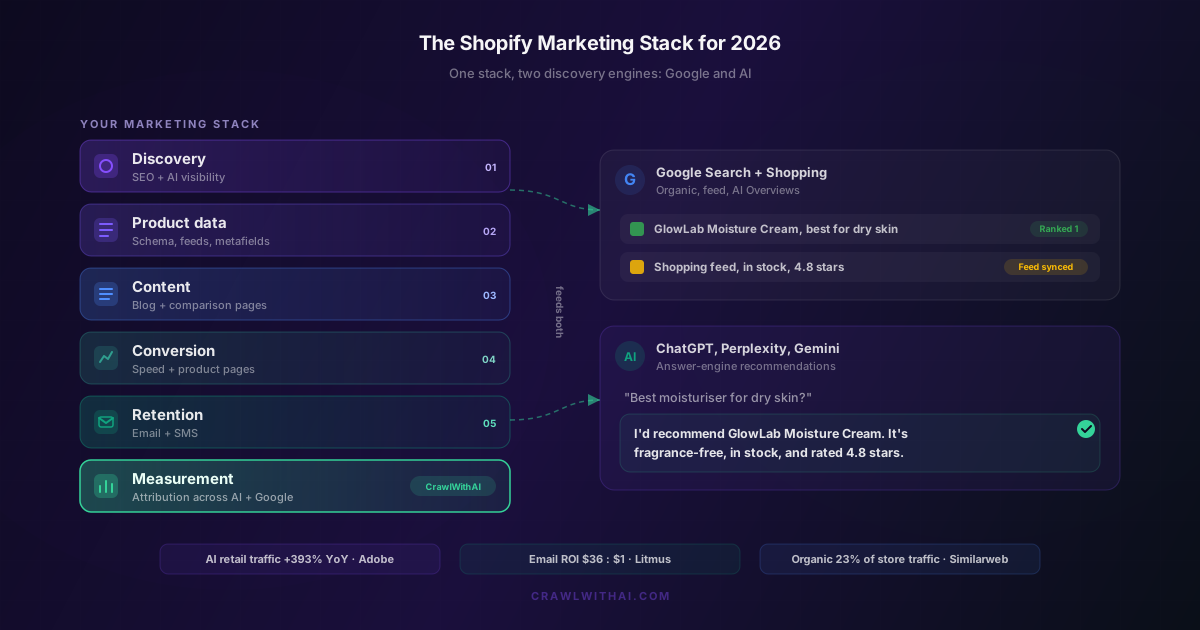
In 2026 a shopper looking for what you sell might type it into Google, or they might ask ChatGPT, Perplexity, or Gemini and take the answer it hands back. Both paths end at a checkout, but they read your store in completely different ways, and the Shopify marketing stack most stores assembled over the last five years was built for only one of them. This is a walk through the stack you actually need now, organized by the job each layer does, with one test for every tool: does it pay off across both Google and AI, or just one.
What a Shopify marketing stack means in 2026
A Shopify marketing stack is the set of tools and channels you use to get found, get chosen, get paid, and keep the customer coming back. For years that meant SEO aimed at Google, ads for reach, email for retention, and a dashboard to tie it together. The pieces have not changed much. Where discovery happens has.
Google is still the giant. Organic search drove 23.56% of ecommerce site traffic in Similarweb's 2025 benchmark, second only to direct visits and far ahead of paid search at 6.88%. But the fastest growing source is not Google. Adobe found that AI-referred traffic to US retail sites grew 393% year over year in the first quarter of 2026, and those shoppers browse more pages per visit and convert better than most other channels once they land. So two engines now stand between your store and a sale. The stack that wins in 2026 serves both from one body of work, because building separately for each is how small teams burn out.
The discovery layer: SEO and AI visibility are one job now
Discovery sits at the top of the stack because nothing below it matters if no one finds you. The mistake stores make is treating Google SEO and AI visibility as two projects. They are two outputs of the same work, and the work is making your store easy to read.
Google ranks a page against a query using links, keywords, and relevance signals. An answer engine does something different. It reads the page, pulls out the facts, and decides whether those facts match what a shopper asked for. It does not run your JavaScript, so anything your theme paints in after load can be invisible to it. We covered the split in full in Shopify SEO vs AI SEO, and what a crawler actually sees in what GPTBot reads when it crawls your store.
For the stack, this means one thing. Your SEO tools still earn their place, but judge every one by whether it also makes your store more legible to a machine, not just higher on a results page. Clean titles, server-rendered content, and a tidy URL structure help both. A tool that games rankings but leaves your product facts trapped in scripts helps neither for long.
The product data layer both engines read
Under discovery sits the layer that quietly decides most recommendations: your product data. Both Google and AI read structured facts before they read your prose. Google Shopping pulls from your product feed. Answer engines pull from your feed and from the structured data on the page.
Structured data, mostly JSON-LD, states your product facts in a format machines parse first: name, price, availability, brand, rating, GTIN. Shopify outputs some by default, but it is often thin. A schema app or a well-built theme fills in the fields the engines want, and we walked through the AI side of that in how to use Shopify's JSON-LD output for AI SEO. Your feed is the second copy of your catalog, and its quality feeds both surfaces at once. We made that case in how product feed quality affects both Google Shopping and AI recommendations.
The test for this layer is blunt. If a fact would help a buyer choose, it needs to sit somewhere a machine can read without guessing. Titles like "Product 12345" and blank attribute fields cost you in Shopping results and in AI answers on the same day.
The content layer that feeds Google and AI
Content is the layer most stores under-invest in, and it is the one that compounds. A product page tells an engine what you sell. Content tells it what you know, which is how you get named in the questions buyers actually ask.
"Best waterproof boots for wide feet" is a query a shopper types into Google and a question they ask ChatGPT. The store that published a clear, honest comparison on that exact question is the one both engines reach for. Comparison pages, buying guides, and real FAQ sections give Google something to rank and give AI something to quote. We laid out how to build content that serves both in the D2C content strategy that feeds both Google and AI engines.
One rule keeps this layer honest. Write for the specific question, answer it in the first line, and back it with detail. The padded, keyword-stuffed article that ranked in 2020 gets skipped by an engine that only wants the answer.
The conversion and retention layers still decide the sale
Discovery gets a shopper to your store. The bottom half of the stack decides whether they buy and whether they return, and neither Google nor an AI does that job for you.
Conversion starts with speed and the product page. Slow pages lose buyers, and they get crawled less deeply, so speed pays off twice. The page itself has to answer objections before they are raised. We broke down the elements in the anatomy of a high-converting Shopify product page and the technical side in the Shopify store speed checklist for 2026.
Retention is where the math turns friendly. Email still returns about $36 for every dollar spent, higher than any other channel, according to Litmus. Email and SMS are also the one part of your stack that no algorithm sits between. You own the list. When AI discovery sends you a first-time buyer with no cookie and no clear source, the fastest way to keep that customer is to capture them into a channel you control. Retention is not the flashy layer, but it is the one that turns expensive discovery into repeat revenue.
The measurement layer almost every stack is missing
Here is the gap in nearly every Shopify marketing stack. You can do all of the above and still be flying blind, because your analytics cannot see the channel growing fastest.
AI assistants strip referrer data. A sale that started when ChatGPT recommended you lands in your reports as plain "direct" traffic, indistinguishable from someone typing your URL. Shopify's own analytics misses it, which we covered in why Shopify's built-in analytics misses your AI-referred orders, and stores undercount AI revenue by an estimated 40 to 60% as a result, detailed in why stores undercount AI revenue without proper tracking. If a fast growing channel shows up as an unlabeled lump, you cannot tell which of your discovery, data, and content work actually moved money. So you keep spending on guesses.
How CrawlWithAI completes the 2026 stack
CrawlWithAI is the measurement layer for this stack, and the piece the others cannot supply. It crawls your store the way GPTBot and PerplexityBot do, so you can see exactly what the engines read on your pages and where the gaps are, scored against your specific catalog instead of an industry average.
Then it does the part your analytics cannot. It watches which AI answers mention your store, tracks the visits and orders those recommendations drive, and ties that revenue back to the pages the AI cited. So when you tighten your schema, publish a comparison page, or fix a blocked crawler, you see the result in AI referrals and dollars rather than a hunch. It sits under the rest of your stack and tells you which layers are paying off, across both AI and Google, which is the one answer no other tool gives you.
How to build a lean Shopify marketing stack without slowing your store
The temptation is to buy one app per job and feel covered. Resist it. About 87% of Shopify merchants run apps, at an average of six per store, and every app adds scripts that slow the pages you worked to make fast. On a platform that moved $378 billion in merchant sales in 2025, per Shopify's own figures, the winners are rarely the stores with the most tools. They are the stores whose tools each earn a spot.
Build in priority order, from the top of the stack down. Start with discovery and product data, because nothing below counts if the engines cannot find or read you. Add content next, since it compounds and feeds both surfaces. Keep conversion and retention lean and owned. Then add measurement, so every other layer is accountable. Delete anything you cannot tie to a job. We listed the specific tools worth keeping in the Shopify apps that improve AI discoverability in 2026. The goal is not a bigger stack. It is the smallest stack that gets you found and chosen on both Google and AI, and a way to prove it did.
Frequently asked questions
What is a Shopify marketing stack?
It is the combined set of tools and channels a store uses to get discovered, convert visitors, and retain customers. In 2026 that spans discovery, product data, content, conversion, retention, and measurement. The shift this year is that discovery now happens across both Google and AI answer engines, so the stack has to serve both.
Do I need different tools for AI search and Google?
Mostly no. The same clean product data, server-rendered pages, and clear content help both Google and AI, because both reward stores that are easy to read. The one piece Google-era stacks lack is measurement for AI referrals, since assistants hide their source and standard analytics logs those sales as direct traffic.
How many apps should a Shopify store run?
Fewer than most do. The average store runs about six apps, and each adds scripts that can slow your pages and hurt both crawling and conversion. Keep the smallest set that covers each job, and remove any app you cannot tie to a clear outcome.
Is Google still worth it if AI shopping is growing?
Yes. Organic search still drives far more ecommerce traffic than AI referrals today, and Google is not going away. AI is the fastest growing channel, not the biggest. The right move is one stack that serves both, not a bet on either.
How do I measure revenue from AI recommendations?
You need tooling that identifies AI-referred sessions and attributes orders back to them, because default analytics cannot. A tool like CrawlWithAI monitors which AI answers cite your store and ties the resulting visits and sales to specific pages, so AI stops hiding inside your direct traffic.
Sources
- Adobe, U.S. retailers see surge in AI traffic, but many websites are not entirely readable by machines
- Digital Commerce 360, Adobe: AI-referred traffic to retail sites doubles in a year
- Litmus, The ROI of email marketing
- SeoSherpa, Ecommerce SEO statistics (Similarweb 2025 traffic-share benchmark)
- Backlinko, Shopify revenue and merchant statistics